
ASD support groups play a vital role for parents, caregivers, and individuals with autism. These groups provide a space for sharing experiences, information, and resources, fostering a sense of community and understanding among participants.
Needless to say, joining ASD support groups offers numerous advantages that significantly impact individuals and their families. These benefits can include emotional support, access to valuable resources, and opportunities for personal growth.
4 Ways to Locate ASD Support Groups
Finding an ASD support group near you can be essential for gaining support and sharing experiences. Here are some effective strategies to locate these groups.
Utilize Online Resources
The internet provides a wealth of resources for finding ASD support groups. Many websites offer directories where individuals can search for local groups based on their location.
Some of these resources include:
- Online Directories: Websites that curate lists of autism support groups by region.
- Forums: Online platforms where individuals share information about local resources.
- Social Media: Pages and groups dedicated to connecting individuals with autism and their families.
By using targeted search terms such as “ASD support group near me,” individuals can significantly narrow down results to find relevant support options in their area.
Contact Local Autism Organizations
Local autism organizations play a crucial role in connecting individuals with support groups. These organizations often have up-to-date information about available resources and can assist in the search for appropriate groups.

Parents, caregivers, and individuals with autism can consider the following approaches to connect with these organizations, such as local chapters, community centers, and autism advocacy groups.
Asking questions, expressing specific needs, and requesting referrals can enhance the likelihood of finding an ideal ASD support group that meets the unique needs of individuals and families.
Reach Out to Schools and Educational Institutions
Schools and educational institutions often have programs and resources that cater to students with autism. They may also hold information sessions or have connections to local ASD support groups. Contacting these institutions can reveal opportunities for support and additional resources. To better understand diagnostic classifications and how they relate to autism support services, check out our article What is F84 in Autism? for deeper insight.
Inquire at Healthcare Facilities
Lastly, healthcare facilities, including hospitals and clinics, may have information about local ASD support groups. These institutions often work directly with individuals with autism and their families.
This makes them a valuable resource for finding support.
Using the tips mentioned above can significantly help in locating an ASD support group near you. By reaching out and inquiring about available resources, individuals and families can access the support they need.
How Support Groups Can Enhance Well-Being
Support groups contribute to overall well-being in several ways. Participating in these groups can improve mental health and quality of life for individuals with autism and their families.
Here are some of its key benefits:
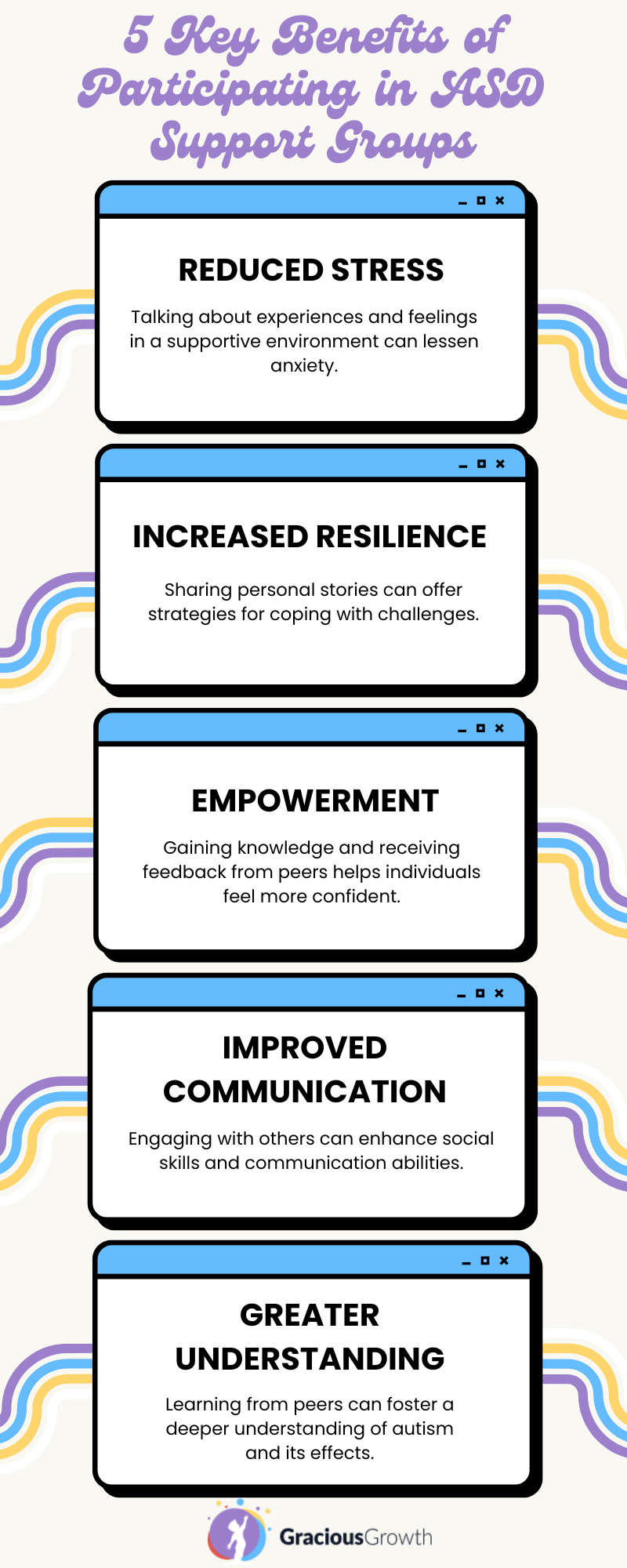
Utilizing the resources and support provided by these groups greatly contributes to the well-being of those involved, making the search for an ASD support group near them an important task.
Making the Most of ASD Support Groups
To truly benefit from an ASD support group, active participation and involvement are essential. Engaging with the group can foster connections and provide resources that enhance the experiences for both parents and individuals with autism.
Being actively engaged in an ASD support group can lead to numerous advantages. Members are encouraged to share insights, ask questions, and participate in discussions. This involvement can deepen understanding and enhance relationships within the group.
Regular attendance can also provide opportunities for learning and personal development. The more a person engages, the more likely they are to gain valuable information and support.
Moreover, support groups create a safe environment for individuals and families to seek advice and share their experiences. This exchange can produce a wealth of knowledge that may not be easily accessed elsewhere.
Individuals should feel encouraged to express their needs and concerns. By sharing stories and challenges, they not only receive support but also contribute to the collective understanding of autism in the community.
Active participation and seeking support within ASD support groups can create a rewarding experience for members, enriching their lives and enhancing their coping strategies.
The Bottom Line
ASD support groups offer more than just a place to talk — they provide a sense of belonging, shared understanding, and valuable guidance for individuals with autism and their families.
From emotional support to practical resources, these groups can truly improve quality of life. By taking simple steps to find and actively participate in a group, families can build stronger connections, learn new strategies, and feel empowered in their journey.
Whether you’re a parent, caregiver, or individual with autism, joining a support group can make a meaningful difference. At Gracious Growth, we understand how powerful it is to connect with others who share similar experiences, especially while navigating the challenges and triumphs of autism. In addition to offering compassionate, individualized ABA in Utah, Colorado, and Ohio, we also help families find supportive communities that foster connection and understanding.
Our therapy services are grounded in evidence-based practices, and we take pride in delivering them with a personal touch that respects the uniqueness of every individual.
If you’re ready to take the next step, contact us today — we’re here to walk with you on this journey and help your loved one reach their full potential.