
If you’re parenting or caring for an autistic child, chances are you’ve encountered moments when everything seems too much for them. It could be when the lights are too bright, the sounds too loud, the clothes too itchy, or the crowd too overwhelming. These moments often point to something called sensory overload.
It’s not always easy to spot at first, especially if you’re new to understanding how sensory processing works in autism. But once you start recognizing the signs, you can take steps to support your child in ways that feel safe, calm, and respectful of their needs.
Sensory overload happens when one or more of the senses become overstimulated to the point that the brain can’t process everything. This can result in meltdowns, withdrawal, anxiety, or even aggression.
So, for parents and caregivers who want practical, compassionate strategies to help their autistic child navigate sensory overload, we’ve got you covered. Here, we’ll look at seven tips that can help you build a more supportive environment, reduce sensory-related stress, and bring greater calm and connection into your daily life.
Let’s get started.

Learn Your Child’s Sensory Profile
Every autistic child has a unique sensory profile. Some may be hypersensitive to sound but crave deep pressure. Others might be highly reactive to certain textures but seek out constant movement. Understanding how your child experiences the world through their senses is the first step toward helping them.
Pay close attention to their reactions to different environments and stimuli.
Does your child cover their ears when the vacuum is on? Do they refuse to wear certain clothes? Do they seek out tight hugs or avoid touch altogether?
These observations provide important clues. You might even consider creating a sensory diary to track what situations lead to distress and what seems to help. Over time, you’ll build a picture of what overwhelms your child and what soothes them.
Occupational therapists who specialize in sensory integration can also assess your child’s sensory needs in a structured way. They can help identify whether your child is sensory-seeking, sensory-avoiding, or a mix of both, and offer specific interventions and strategies to address these needs.
Create a Sensory-Friendly Home Environment
Once you have a better understanding of your child’s sensory preferences, you can begin to adapt your home to be more accommodating. You don’t need to overhaul your entire living space, but small changes can make a big impact.
If your child is sensitive to light, consider using softer lighting, like warm LED bulbs or dimmable lamps. If sound is an issue, try noise-canceling headphones, white noise machines, or rugs and curtains to reduce echo.
For tactile sensitivity, let your child choose the clothes they feel most comfortable in, and keep tags, seams, and fabric textures in mind when shopping for clothing.
Designating a calm-down corner or sensory retreat area can also be incredibly helpful. This space doesn’t need to be elaborate. It can just be a cozy corner with pillows, a tent with soft lights, or a small room with calming music.
The key is to make it predictable, quiet, and comforting
Practice Co-Regulation Before and During Sensory Overload
Sensory overload isn’t always avoidable. That’s why co-regulation is such a powerful tool. When your child begins to escalate, your own emotional tone can either escalate or de-escalate the situation.
Instead of reacting with frustration or fear, try to stay grounded and present. Speak in a soft, steady voice.
Offer your child choices when possible, like “Would you like to go to your sensory corner or sit on the couch with your blanket?” Physical proximity can help too, as long as your child is comfortable with it. Just being near them with a calm demeanor can help signal that they are safe.
Over time, children begin to internalize this sense of safety and may become better at self-regulating.
Use Predictability and Visual Supports
Unpredictable environments and sudden changes can make sensory overload worse. Autistic children often thrive on routine and structure, not because they’re rigid, but because predictability helps reduce the sensory and cognitive load of daily life.
Using visual supports can add another layer of clarity. Visual schedules, timers, or simple cue cards can help your child understand what’s happening now, what’s happening next, and when they’ll get a break.
For example, a visual schedule that includes playtime, snack time, and rest time can reduce the stress of transitions.
You can also create a “sensory plan” that outlines what to do when overload happens. This might include visuals that represent “I need a break,” “Headphones,” or “Go to calm corner.”
Giving your child the tools to communicate their needs, especially if they’re nonverbal or have limited speech, can go a long way toward preventing full-blown meltdowns.
Introduce Sensory Diets and Body-Based Interventions
A sensory diet is a personalized set of activities that help regulate a child’s sensory system. Think of it as daily “sensory nutrition.” Just like our bodies need regular meals to stay fueled, some children need regular sensory input to stay calm and focused.
For example, a child who craves movement might benefit from jumping on a trampoline, swinging, or carrying heavy objects.
A child who needs calming input might enjoy deep pressure through weighted blankets, compression garments, or firm squeezes. Others might find comfort in oral input like chewing gum or sipping through a straw.
It’s best to work with an occupational therapist to design a sensory diet that meets your child’s unique needs. The goal is to provide the right kind of sensory input at the right times of day so your child’s nervous system stays more balanced throughout the day.
Recognize the Signs of Overload Early
One of the most powerful tools you can develop is the ability to spot the early signs of sensory overload. The earlier you intervene, the more likely you are to prevent a meltdown or shutdown.
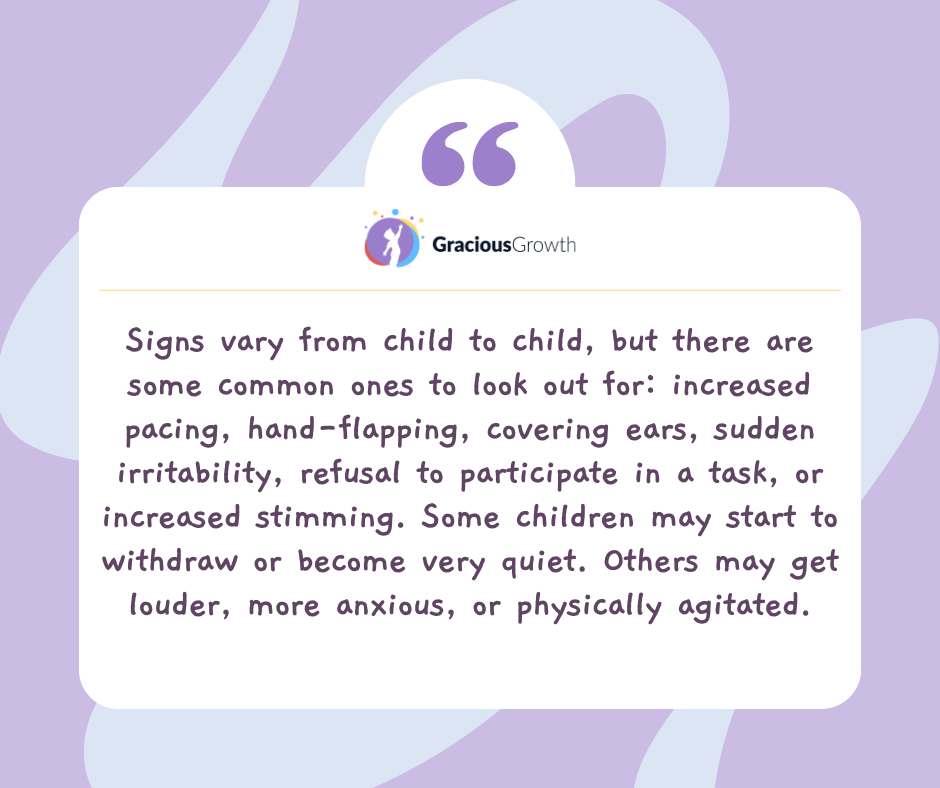
When you notice these signs, try to intervene in a low-pressure way. Offer a break, reduce sensory input, or move to a quieter space. You don’t need to talk a lot. Sometimes, just saying, “I see you’re having a hard time, let’s take a break together,” is enough to help your child feel seen and supported—especially if sensory challenges are involved, like those discussed in Are Oral Sensitivities in Autism Common Among Autistic Individuals?
Be Patient, Flexible, and Compassionate
Supporting a child through sensory overload isn’t always easy. There will be moments of frustration, exhaustion, and confusion. You may find yourself second-guessing what you did or wondering why a strategy that worked yesterday doesn’t work today.
This is all normal. The most important thing you can offer your child is consistent love, patience, and flexibility.
Remember, sensory processing challenges aren’t behavior problems. They’re nervous system responses that your child can’t always control. Your child isn’t choosing to be difficult. Instead, they’re struggling, and they need your help to feel safe.
But just as your child deserves compassion, so do you. You are doing incredibly hard work, often without enough recognition or rest. Give yourself space to make mistakes, to learn, and to try again. Find support through other parents, autism professionals, or caregiver groups. You are not alone in this.
Final Thoughts
While trying to deal with sensory overload in your autistic child, you won’t get everything right all the time, and that’s okay. What matters most is your willingness to keep showing up, learning, and loving your child in ways that honor who they are.
Sensory overload may always be part of your journey, but with the right tools and a lot of heart, you can help your child navigate the world with more comfort, confidence, and joy. That’s exactly what we aim to support through our personalized ABA services in Utah, Colorado, and Ohio.
At Gracious Growth, we take the time to truly understand each child’s unique needs and strengths, offering compassionate, one-on-one support that’s rooted in evidence-based practices. Our team brings warmth, consistency, and genuine care to every session. Contact us today if you’re ready to take the next step toward meaningful progress.
Sources: