
For many toddlers, play is more than just fun. It is a pathway to learning, discovery, and emotional growth. For autistic toddlers, play that involves touch, sound, and movement can be especially helpful.
One tool that stands out in supporting their development is the sensory bin. These bins, filled with various materials such as rice, water beads, or textured fabrics, create a space for hands-on exploration.
But they are more than just containers of fun. Sensory bins offer important developmental benefits that can support a child with autism in meaningful ways. Let’s look at what these benefits are.
Supporting Tactile Learning and Exploration
Sensory bins are built on the idea that children learn through their senses. When toddlers run their fingers through beans or scoop up small objects, they are learning about the world in a way that feels safe and engaging.
For autistic toddlers, who may process sensory input differently, this kind of learning can be especially important.
Touching different textures, seeing colorful objects, hearing the sounds they make, and sometimes even smelling or tasting safe items can stimulate a child’s senses. These experiences encourage exploration and help children become more comfortable with various sensations. This is important for children who are sensitive to certain textures or sounds.
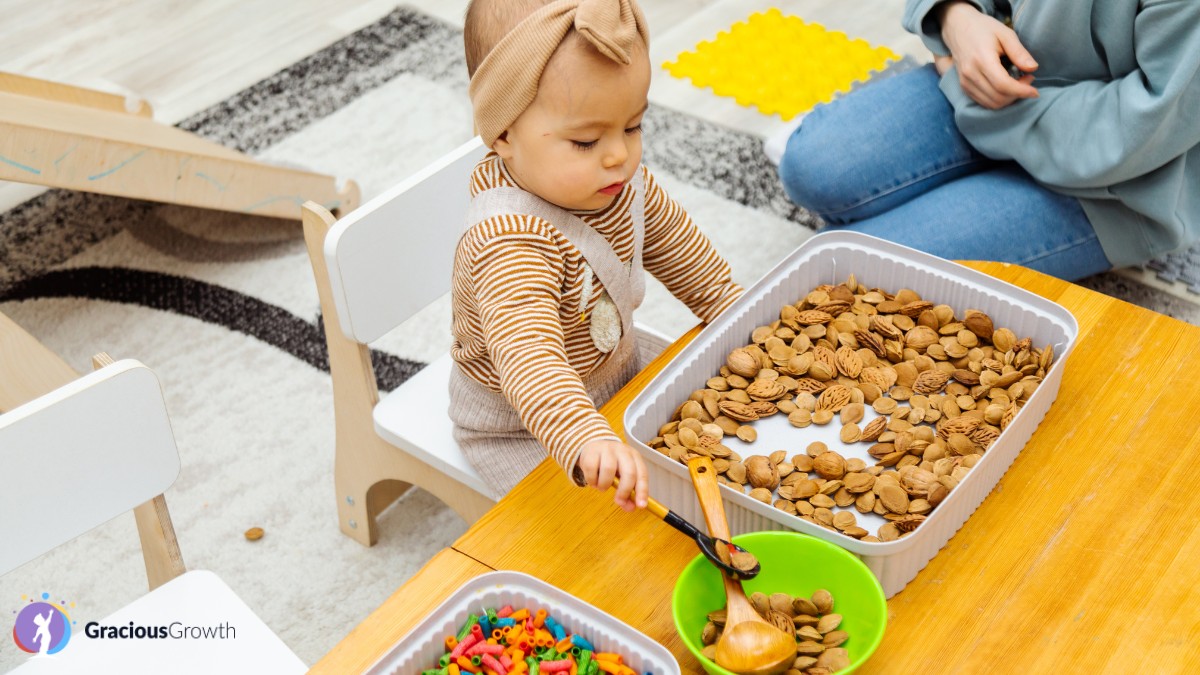
As toddlers dig, pour, scoop, and sift materials in a sensory bin, they are also working on their fine motor skills. These small hand movements help strengthen the muscles needed for writing, self-care, and everyday tasks. The simple act of pouring rice from one cup to another teaches hand-eye coordination and builds muscle control in a fun and pressure-free environment.
In addition, activities like pouring and scooping introduce children to basic ideas like cause and effect.
When a child dumps sand into a container and watches it fill up, they begin to understand how actions lead to outcomes. This hands-on approach is especially helpful for children who benefit from visual and physical feedback when learning new concepts. Similarly, tools that offer sensory input through movement can have a powerful impact—explore how these tools support development in our article, How Beneficial are Sensory Swings for Autism.
Encouraging Language and Communication
Sensory bins naturally create opportunities for communication. Whether a toddler is playing alone or with a parent, therapist, or teacher, the variety of textures and items provides lots to talk about.
Autistic toddlers who are developing their language skills can use sensory bins to explore new words and phrases.
For example, describing what something feels like introduces children to new vocabulary. Naming objects like shells, buttons, or blocks helps build word recognition. Asking and answering questions during play encourages social interaction and conversation.
A child might say, “I found a red ball,” or “This is sticky,” which helps them learn to describe their environment and express their thoughts.
For nonverbal children or those just beginning to talk, sensory bins can be paired with visual supports like pictures or sign language to promote communication. The key is to meet each child where they are and let the sensory experience guide their expression.
Helping with Emotional Regulation
One of sensory bins’ most valuable roles is helping children manage their emotions. Autistic toddlers often face challenges with emotional regulation, especially when they encounter overwhelming sensory input.
Sensory bins offer a way to calm the nervous system and provide comfort during stressful moments.The act of scooping soft sand, squeezing water beads, or sorting calming objects like cotton balls and feathers can have a soothing effect. These activities can create a sense of control and safety, allowing children to self-regulate when they feel overstimulated or anxious.
In this way, sensory bins are more than playthings. They are tools that can be used intentionally to support emotional health, making them a valuable part of any routine that aims to support the well-being of autistic toddlers.
Building Cognitive and Social Skills
Cognitive development in young children involves learning how to think, reason, and solve problems. Sensory bins encourage this type of growth through interactive play. Sorting objects by color, size, or shape builds categorization skills. Counting items in the bin supports early math concepts. Exploring new materials introduces scientific thinking.
These bins also promote creativity and imagination. Children might pretend that they are digging for treasure, building a construction site, or exploring an ocean world.
This kind of imaginative play encourages flexible thinking and storytelling, which are key components of cognitive development.
Social skills can also grow through sensory play. While playing side-by-side or with guidance from adults, children learn to share materials, take turns, and observe others. These interactions, though simple, help autistic toddlers build early relationship skills in a setting that feels natural and enjoyable.
Final Thoughts
Sensory bins are more than just fun containers of textured materials. They are powerful tools that support the development of autistic toddlers in many ways. Through tactile play, children learn about their environment, build fine motor skills, and expand their vocabulary.
They develop cognitive skills and learn to regulate their emotions. And perhaps most importantly, they gain confidence in exploring the world around them in a way that feels safe and supportive. If you’re a parent or caregiver of an autistic toddler, consider incorporating sensory bins into your daily routine.
You might be surprised by how much learning, calming, and connecting can come from something as simple as a bin filled with rice or cotton balls. These seemingly small tools can unlock big moments of growth, especially when guided by experienced professionals who truly understand the unique needs of each child.
At Gracious Growth, we provide high-quality ABA therapy and individualized care through our autism services in Colorado, Utah, and Ohio. Our team is deeply committed to creating a nurturing environment where children feel safe to explore, learn, and thrive every step of the way.
If you’re ready to take the next step in supporting your child’s development, contact us today. We’re here to help your family grow with care and purpose.
Sources: