
Gluten has been at the center of many discussions surrounding autism, especially when it comes to diet and behavior. Parents, caregivers, and professionals often wonder if removing gluten can ease certain symptoms or improve overall well-being in autistic individuals.
Understanding how gluten interacts with the body and brain can help clarify whether dietary changes might make a meaningful difference.
How Does Gluten Affect Autism?
Gluten has been a topic of interest for many parents and researchers exploring its effects on autism. Some autistic individuals may have sensitivities to gluten that impact their gastrointestinal health, leading to symptoms like bloating, constipation, or discomfort, which in turn can influence behavior and mood.
There’s also a theory that gluten may affect brain function through what’s called the “gut-brain connection.”
When the gut is inflamed or not functioning well, it may potentially affect how the brain works, possibly intensifying certain autism-related behaviors like irritability, inattention, or hyperactivity.
Despite these concerns, scientific research on the link between gluten and autism is mixed.
While some families report improvements in behavior or communication after removing gluten from a child’s diet, large-scale studies have not consistently confirmed a direct cause-and-effect relationship.

Many experts agree that a gluten-free diet may be helpful for autistic individuals who have celiac disease or a diagnosed gluten sensitivity, but it’s not a universal solution for all autistic people.
It’s always best to consult with a healthcare provider or dietitian before making significant dietary changes.
Research Findings on Celiac Disease and Autism
Recent research has unveiled significant links between mothers diagnosed with celiac disease and their autistic children. This connection suggests that gluten may play a role in the development or exacerbation of autism in certain individuals.
Some key findings include the following:
- Autistic individuals are reported to be three times more likely to have positive celiac blood tests compared to the general population.
- A study indicated immune system reactions to gluten in some children diagnosed with autism.
- Mothers with celiac disease have three times the risk of giving birth to a child with autism.
The heightened prevalence of gastrointestinal symptoms among individuals with autism also strengthens the hypothesis that gluten could be an exacerbating factor for some.
The comorbidity between autism and celiac disease suggests that practitioners and caregivers might need to consider dietary adjustments, especially regarding gluten intake.
In addition to the links with celiac disease, gluten sensitivity has also been highlighted as an area of concern for notably some individuals with autism. Various studies have explored gluten sensitivity in autistic individuals, revealing potential immune system reactions that may affect behavior and gastrointestinal health.
This gluten sensitivity can lead to a range of symptoms and may contribute to the heightened rate of gastrointestinal issues often reported in those on the autism spectrum.
Caregivers may find it beneficial to monitor the dietary intake of individuals with autism, particularly regarding gluten-containing foods, to see if any positive changes occur in symptoms or behavior.
Exploring how gluten affects autism requires understanding these connections and being mindful of dietary choices for those on the autism spectrum.
Hypotheses on Gluten in Autism
Understanding the potential impact of gluten on autism has led to various hypotheses regarding how gluten might influence individuals on the spectrum. These hypotheses consider a range of physiological mechanisms that may link gluten exposure to behavioral and cognitive symptoms observed in autism.
Several hypothetical mechanisms have been proposed to explain the connection between gluten and autism. These include:
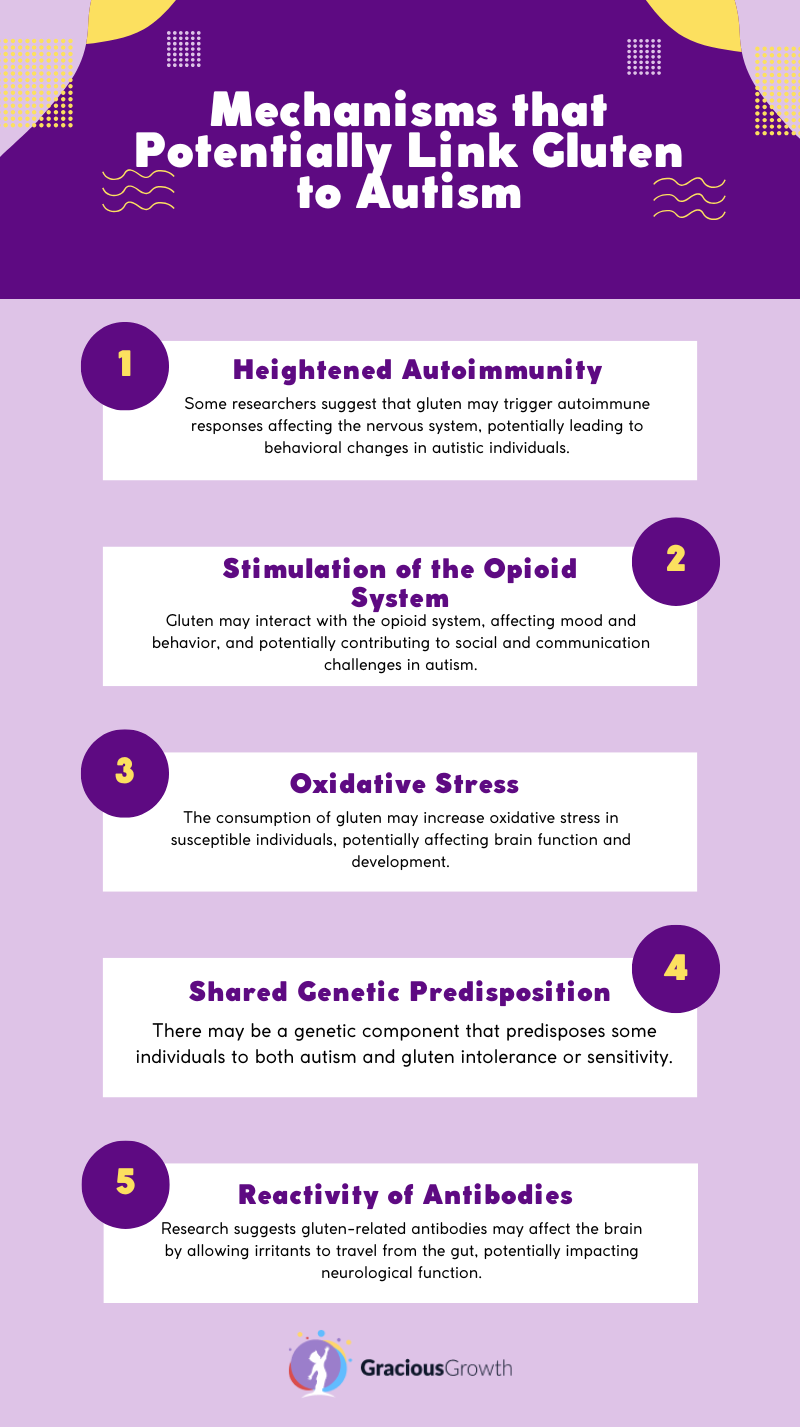
Recent studies have suggested that a subset of children with autism demonstrate increased immune reactivity to gluten, further supporting the need to understand how gluten affects autism.
Recent Studies on Gluten Sensitivity
Recent studies have indicated a notable connection between gluten and autism spectrum disorder.
Based on research, autistic individuals are three times more likely to have positive celiac blood tests compared to the general population. This suggests an immune system response to gluten without the associated damage to the small intestines, indicating a possible non-celiac gluten sensitivity.
These findings point to the immune system’s potential involvement in autism, drawing attention to gluten as a factor that might worsen symptoms for some individuals.
That said, the relationship between immune system abnormalities and autism is receiving increasing scrutiny. Studies have demonstrated a comorbidity between autism and celiac disease, where individuals with autism exhibit both conditions at higher rates than expected.
The association is not only noted in the presence of celiac disease but also in features related to gluten sensitivity.
Epidemiological studies have explored the timing of autism diagnoses in relation to celiac disease, indicating a connection between celiac disease antibodies and the features of autism. Hypothetical mechanisms suggest various pathways through which gluten could influence autism.
These include:
- Heightened autoimmunity
- Stimulation of the opioid system
- Increased oxidative stress
- Shared genetic predisposition
- Antibody reactivity to gluten products
These insights are crucial for parents and caregivers considering dietary modifications for individuals with autism and underscore the importance of continued research into how gluten may affect autism spectrum disorder. This growing curiosity about how diet and immune responses may intersect is also explored in our article “Is There a Potential Link Between Autism and Food Allergies?“
Final Thoughts
While the connection between gluten and autism is still being explored, research suggests that gluten may affect some autistic individuals more than others, particularly those with celiac disease or gluten sensitivity.
However, it’s important to remember that a gluten-free diet is not a one-size-fits-all solution. For some, it may bring noticeable improvements; for others, it may have little effect.
What matters most is a thoughtful, individualized approach that is guided by professional advice and close observation to ensure the best support for each person’s unique needs. At Gracious Growth ABA, we take pride in delivering high-quality, compassionate care tailored to each individual and family.
Our team brings expertise and dedication to every session, ensuring real progress through meaningful connections.
We proudly offer autism services in Colorado, Utah, and Ohio, with a strong commitment to helping each child reach their full potential. Reach out to us today to learn how we can support your family’s journey.
Sources: