
According to various studies, autistic children tend to have much lower levels of vitamin A than their typically developing peers. One pilot study found that more than 77 percent of autistic children had a vitamin A deficiency.
This is more than just a statistic. It points to a widespread issue that could be contributing to the severity of autism traits and symptoms.
The lower the vitamin A levels, the more intense the autism symptoms tend to be. Researchers have discovered a negative link between vitamin A levels and the Childhood Autism Rating Scale, a common tool used to measure autism severity.
In simple terms, children with the most severe symptoms often have the lowest levels of vitamin A.
Feeding issues can make this problem even worse. Many autistic children experience picky eating habits or show resistance to trying new foods. These behaviors can limit their intake of vitamin-rich foods, further deepening the deficiency.
Vitamin A Deficiency and Sensory Processing in Autism
Many autistic children struggle with sensory processing. This can show up as hypersensitivity to lights, sounds, textures, or even smells.
Some children avoid certain foods because the texture is overwhelming. Others may gravitate toward specific sensory input, like spinning or rocking. Although sensory issues are a core feature of autism, there is growing speculation that nutrient deficiencies, including vitamin A, could be exacerbating these challenges.
Retinoic acid, which is the active form of vitamin A, influences how neurons form and communicate. It plays a role in shaping sensory pathways during early brain development.
The moment vitamin A levels are low, these pathways may not develop optimally. As a result, sensory input might be misinterpreted or overwhelming to the brain. This can lead to increased sensitivity, reduced tolerance for stimulation, and difficulty filtering out background noise or visual clutter.
In real life, this may look like a child who cannot tolerate wearing certain clothing, reacts strongly to loud noises, or refuses most foods due to texture.
While vitamin A deficiency is not the sole cause of these sensory challenges, it may intensify them or make it harder for the brain to adapt.
Impact on Gastrointestinal Health and Feeding Issues
Vitamin A is also vital for maintaining the integrity of the mucosal linings in the body, including the lining of the digestive tract. This is especially important for autistic children, many of whom already struggle with gastrointestinal issues.
Problems such as constipation, diarrhea, reflux, and bloating are common among autistic individuals, and while these symptoms have multiple potential causes, poor nutritional status is a likely contributor.
When the lining of the gut is compromised, it may become more permeable, allowing toxins as well as partially digested food particles to get through the bloodstream. This can then lead to inflammation and immune responses.
Some researchers believe this process may exacerbate behavioral symptoms in autistic children, particularly when paired with food sensitivities or intolerances.
Vitamin A helps preserve the health of these mucosal barriers. A deficiency may weaken the gut lining, making children more vulnerable to inflammation, infections, and discomfort.
This can, in turn, lead to increased food aversions and reinforce a cycle of limited eating. As food choices narrow, so does the intake of essential nutrients, including vitamin A, creating a downward spiral that’s hard to break without targeted intervention. This pattern of dietary restriction and its potential impact on development closely mirrors the concerns discussed in our article Exploring the Connection Between Sugar and Autism.
Effects on the Immune System and Infections
Vitamin A has long been recognized for its role in immune function. It supports the production and function of white blood cells, which are critical in fighting infections.

For autistic children who are already prone to immune dysregulation or chronic inflammation, a deficiency in vitamin A can make it harder for their bodies to cope with everyday pathogens.
Frequent colds, ear infections, or respiratory illnesses are not uncommon in children with low vitamin A levels. These recurring health issues can interfere with learning, social interaction, and therapy progress.
Additionally, when children are frequently sick or uncomfortable, their behavior may become more challenging.
Vitamin A deficiency may also impair recovery from illnesses. Some parents have observed that their autistic child becomes more withdrawn or irritable after being sick. While illness itself can cause fatigue and mood changes, inadequate nutrition may delay healing and contribute to prolonged behavioral changes.
Practical Considerations for Addressing the Deficiency
For families concerned about vitamin A levels, the first step is usually a nutritional assessment. Pediatricians and registered dietitians can evaluate dietary habits and recommend blood tests to check for a deficiency.
If a deficiency is confirmed, the healthcare team may suggest changes in diet, supplementation, or both.
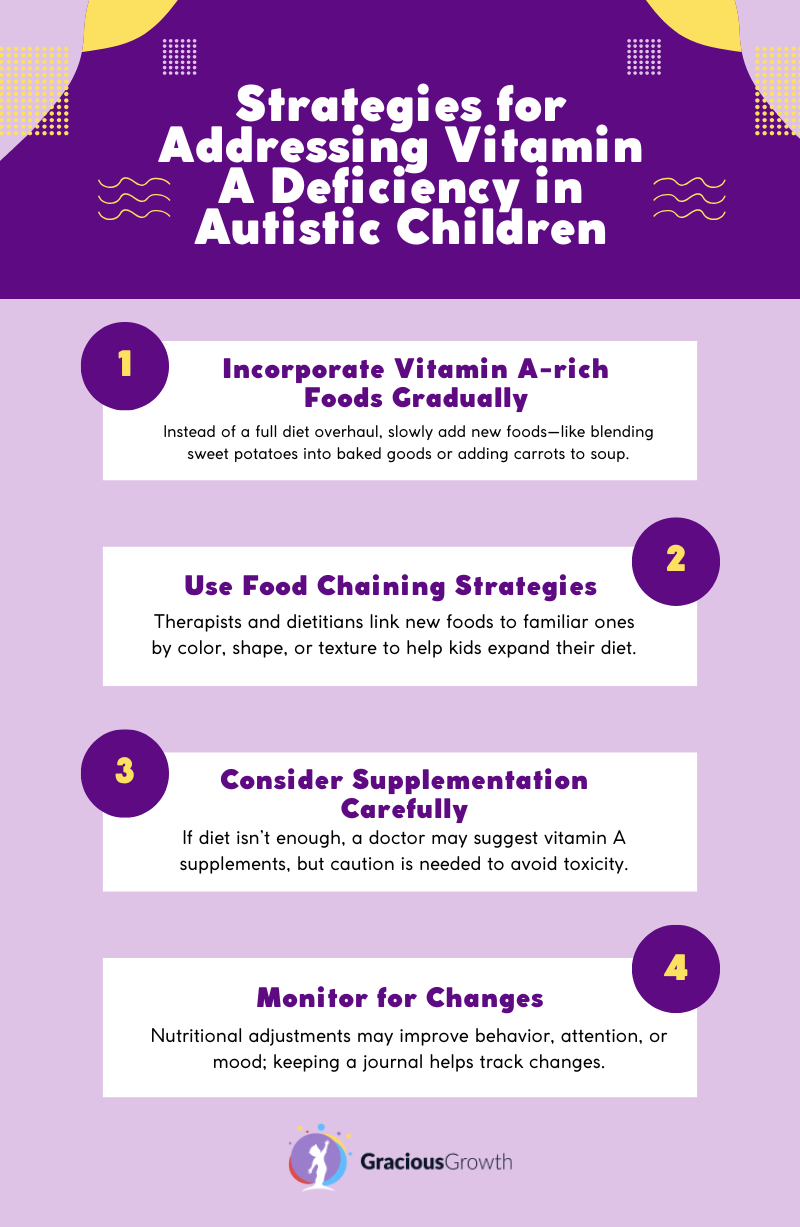
Here are a few practical ways to help address vitamin A deficiency in autistic children:
Conclusion
While vitamin A deficiency is not the root cause of autism, it appears to play a significant role in how some symptoms manifest and evolve. From sensory processing and gastrointestinal health to immune resilience and behavior, this essential nutrient touches many of the systems that are often challenged in autistic children.
For parents and caregivers, understanding the possible link between vitamin A and autism can open new pathways for support and intervention.
By working closely with medical and nutritional professionals, we help families identify and address deficiencies that might be holding their child back from reaching their full potential. At Gracious Growth ABA, we take pride in delivering personalized, compassionate autism therapy that truly makes a difference.
If you’re looking for trusted autism therapy in NC, Iowa, Colorado, and Utah, don’t hesitate to contact us today to learn how we can support your family’s journey with expert ABA therapy tailored to your child’s unique needs.
Sources: